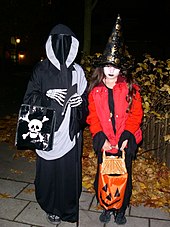
The practice of dressing up in costumes and begging door to door for treats on holidays dates back to the Middle Ages and includes Christmas wassailing. Trick-or-treating resembles the late medieval practice of souling, when poor folk would go door to door on Hallowmas (November 1), receiving food in return for prayers for the dead on All Souls' Day (November 2). It originated in Ireland and Britain, although similar practices for the souls of the dead were found as far south as Italy.Shakespeare mentions the practice in his comedy The Two Gentlemen of Verona (1593), when Speed accuses his master of "puling [whimpering or whining] like a beggar at Hallowmas."
ค้นหาบล็อกนี้
วันพุธที่ 21 ธันวาคม พ.ศ. 2554
Trick or Treat -3-
Trick-or-treating is a customary celebration for children on Halloween. Children go in costume from house to house, asking for treats such as candy or sometimes money, with the question, "Trick or treat?" The word "trick" refers to a (mostly idle) "threat" to perform mischief on the homeowners or their property if no treat is given. In some parts of Scotland children still go guising. In this custom the child performs some sort of trick, i.e. sings a song or tells a ghost story, to earn their treats.
วันจันทร์ที่ 19 ธันวาคม พ.ศ. 2554
Nightmare before christmas >>> this is HALLOWEEN
HALLOWEEN HALLOWEEN HALLOWEEN HALLOWEEN HALLOWEEN HALLOWEEN HALLOWEEN HALLOWEEN HALLOWEEN HALLOWEEN HALLOWEEN HALLOWEEN HALLOWEEN HALLOWEEN HALLOWEEN HALLOWEEN HALLOWEEN HALLOWEEN HALLOWEEN HALLOWEEN HALLOWEEN HALLOWEEN HALLOWEEN HALLOWEEN HALLOWEEN HALLOWEEN HALLOWEEN HALLOWEEN HALLOWEEN HALLOWEEN HALLOWEEN HALLOWEEN
History of HALLOWEENnnn *0*
The word Halloween is first attested in the 16th century and represents a Scottish variant of the fuller All-Hallows'-Even ("evening"), that is, the night before All Hallows' Day Although the phrase All Hallows' is found in Old English (ealra hālgena mæssedæg, mass-day of all saints), All-Hallows-Even is itself not attested until 1556.
Pre-Christian influences
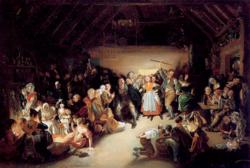
The Halloween holiday is widely thought to have pagan roots, even though the etymology of the word is Christian. Historian Nicholas Rogers, exploring the origins of Halloween, notes that while "some folklorists have detected its origins in the Roman feast of Pomona, the goddess of fruits and seeds, or in the festival of the dead called Parentalia, it is more typically linked to the Celtic festival of Samhain, derived from the Old Irish Samuin meaning "summer's end". Samhain was the first and by far the most important of the four quarter days in the medieval Irish and Scottish calendar and, falling on the last day of autumn, it was a time for stock-taking and preparation for the cold winter months ahead. There was also a sense that this was the time of year when the physical and supernatural worlds were closest and magical things could happen. To ward off these spirits, the Gaels built huge, symbolically regenerative bonfires and invoked the help of the gods through animal and perhaps even human sacrifice. In the Western Isles of Scotland the Sluagh, or fairy host was regarded as composed of the souls of the dead flying through the air, and the feast of the dead at Hallowe'en was likewise the festival of the fairies.
HALLOWEEN !!!!! Let's fun
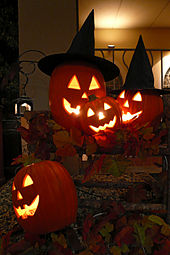
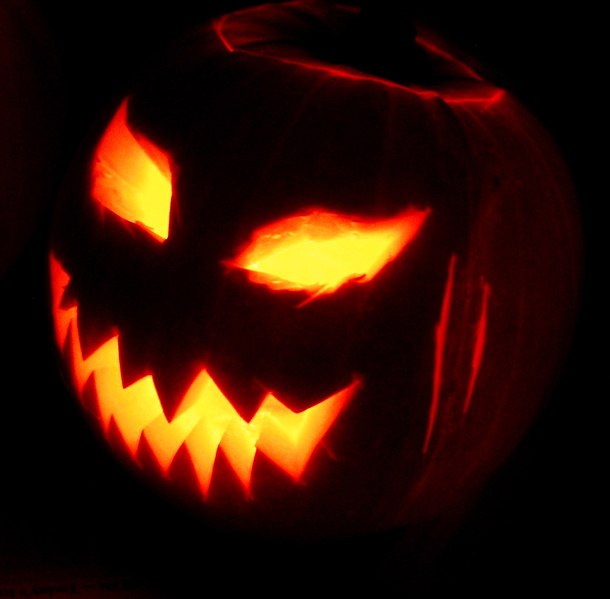
also known as Hallowe'en or All Hallows' Eve, is a yearly holiday observed around the world on October 31, the night before All Saints' Day. Much like Day of the Dead celebrations, the Christian feast of All Hallows' Eve, according to some scholars, incorporates traditions from pagan harvest festivals and festivals honouring the dead, particularly the Celtic Samhain; other scholars maintain that the feast originated entirely independently of Samhain. Typical festive Halloween activities include trick-or-treating (also known as "guising"), attending costume parties, carving jack-o'-lanterns, lighting bonfires apple bobbing, visiting haunted attractions, playing pranks, telling scary stories, watching horror films, as well as the religious observances of praying fasting and attending vigils or church services ...
It's MEeeee
วันพุธที่ 14 ธันวาคม พ.ศ. 2554
สมัครสมาชิก:
บทความ (Atom)